However- it requires a lot of self discipline, the ability to constantly re-prioritize, and the need to focus on what matters most to achieve success.
Where do you want to be?
How do you plan on getting there?
The path to success IS going to be different for everyone, but relentless, hard work is always the main ingredient, no matter who you are or what you're trying to achieve.
Focus like a laser beam on your goals, find the tools necessary for success and implement them, and keep moving forward.
If you get knocked down, pull yourself back up and double your efforts.
This is the one, sure way to continually and ultimately succeed.
Showing posts with label Novel Writing Tips. Show all posts
Showing posts with label Novel Writing Tips. Show all posts
Monday, June 18, 2018


Saturday, March 9, 2013
The Eight Point Story Arc - The Quest
1. Stasis
2. Trigger
3. The quest
4. Surprise
5. Critical choice
6. Climax
7. Reversal
8. Resolution
Here's a reminder of the definition for the quest-
The quest
The trigger results in a quest – an unpleasant trigger (e.g. a protagonist losing his job) might involve a quest to return to the status quo; a pleasant trigger (e.g. finding a treasure map) means a quest to maintain or increase the new pleasant state.
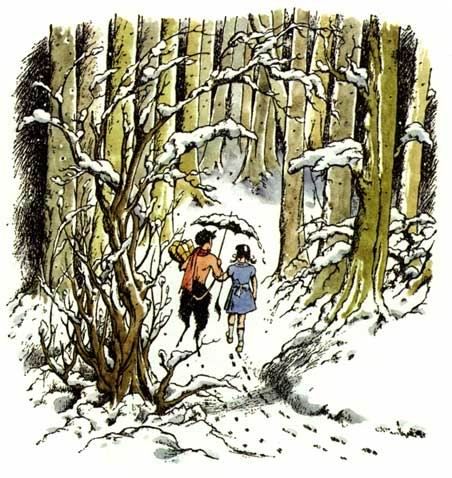
Last time we talked about the trigger, which involved the four children entering Narnia through the wardrobe. This is the transitionary point where the quest begins, and the quest is one of discovery and adventure. What follows is part of the plot synopsis from wikipedia.
Soon after entering Narnia, the children meet Mr. and Mrs. Beaver, who invite them to dinner. The beavers recount a prophecy that the witch's power will fall when two Sons of Adam and two Daughters of Eve fill the four thrones at Cair Paravel. The beavers tell of the true king of Narnia, a great lion named Aslan, who has been absent for many years but is now "on the move again."
The quest begins to explore Narnia, defeat the White Witch, find Aslan, and fulfill the prophecy.
The quest is the real heart of any story.
Get the girl/guy.
Find the treasure.
Discover the killer.
The list goes on and on, but it's important to remember that the quest is only made interesting by the way your characters (especially the protagonist) are affected by it and how they react to what's going on.
Your idea for a story might be the greatest thing since sliced bread, but even the greatest quest can be turned into a school textbook entry if you don't utilize your characters and make it relatable to your readers.
Any comments about the quest of your own story or something you're currently reading? Leave them below. Next time we'll talk about surprise!
Tuesday, March 5, 2013
The Eight Point Story Arc- The Trigger
Well, I'm finally back to discussing the Eight Point Story Arc. Wonders may never cease!
The eight components identified by Nigel Watts in his book Writing A Novel and Getting Published, which I've just ordered for my kindle, are as follows.
1. Stasis
2. Trigger
3. The quest
4. Surprise
5. Critical choice
6. Climax
7. Reversal
8. Resolution
Here is the definition of the Trigger listed from the Daily Writing Tips website.
The Trigger
Something beyond the control of the protagonist (hero/heroine) is the trigger which sparks off the story. A fairy godmother appears, someone pays in magic beans not gold, a mysterious letter arrives … you get the picture.
So what was the trigger in The Lion, The Witch, and the Wardrobe? The simplest answer is that it happens when Lucy enters the wardrobe, and is transported to Narnia to meet Mr. Tumnus.
The trigger in this book could also be considers as having three parts-
1. It begins when the children move to the mansion. This is a major disruption to their lives, and can be viewed as the start of their adventure. (We see this becoming especially true after reading The Magician's Nephew)
2. Lucy passes through the wardrobe into Narnia. I would say this is the "Well, duh!" trigger. This is obviously a major turning point and the true beginning of adventure.
3. All four children pass through the wardrobe into Narnia. Here we see the trigger come to a conclusion and this is where the quest truly begins. It could also be argued that the quest begins after Lucy enters alone, and tries to convince her siblings of the existence of Narnia, but I'll talk more about this next time.
When writing your story, can you define a clear and intriguing trigger? I recently read a book (no, I won't disclose the title) where the only clear trigger I could find came about 5/6ths of the way through the book. Although some boring things happened in this horrible bore of a book, it seemed like the first 5/6ths of the book was stasis. Don't make the same mistake, establish stasis for your characters and then start pounding them over the head with the universe!
In Michael Belmont and the Tomb of Anubis, the trigger happens when Micheal's parents disappear, he then must go on a quest to find them.
Want to send your characters on an exciting quest? Make sure you establish stasis and then 'pull the trigger' Your story will thank you for it!
The eight components identified by Nigel Watts in his book Writing A Novel and Getting Published, which I've just ordered for my kindle, are as follows.
1. Stasis
2. Trigger
3. The quest
4. Surprise
5. Critical choice
6. Climax
7. Reversal
8. Resolution
Here is the definition of the Trigger listed from the Daily Writing Tips website.
The Trigger
Something beyond the control of the protagonist (hero/heroine) is the trigger which sparks off the story. A fairy godmother appears, someone pays in magic beans not gold, a mysterious letter arrives … you get the picture.
So what was the trigger in The Lion, The Witch, and the Wardrobe? The simplest answer is that it happens when Lucy enters the wardrobe, and is transported to Narnia to meet Mr. Tumnus.
The trigger in this book could also be considers as having three parts-
1. It begins when the children move to the mansion. This is a major disruption to their lives, and can be viewed as the start of their adventure. (We see this becoming especially true after reading The Magician's Nephew)
2. Lucy passes through the wardrobe into Narnia. I would say this is the "Well, duh!" trigger. This is obviously a major turning point and the true beginning of adventure.
3. All four children pass through the wardrobe into Narnia. Here we see the trigger come to a conclusion and this is where the quest truly begins. It could also be argued that the quest begins after Lucy enters alone, and tries to convince her siblings of the existence of Narnia, but I'll talk more about this next time.
When writing your story, can you define a clear and intriguing trigger? I recently read a book (no, I won't disclose the title) where the only clear trigger I could find came about 5/6ths of the way through the book. Although some boring things happened in this horrible bore of a book, it seemed like the first 5/6ths of the book was stasis. Don't make the same mistake, establish stasis for your characters and then start pounding them over the head with the universe!
In Michael Belmont and the Tomb of Anubis, the trigger happens when Micheal's parents disappear, he then must go on a quest to find them.
Want to send your characters on an exciting quest? Make sure you establish stasis and then 'pull the trigger' Your story will thank you for it!
Tuesday, January 24, 2012
The Eight Point Story Arc - The Stasis
Today I'm going to continue my discussion on the eight point story arc. The eight parts are as follows.
1. Stasis
2. Trigger
3. The quest
4. Surprise
5. Critical choice
6. Climax
7. Reversal
8. Resolution
It's time to focus on the stasis. Here's a reminder of the definition.
Stasis
This is the “every day life” in which the story is set. Think of Cinderella sweeping the ashes, Jack (of Beanstalk fame) living in poverty with his mum and a cow, or Harry Potter living with the Dursley’s.
So, using The Lion, The Witch, and the Wardrobe as an example, the stasis finds the four Pevensie siblings— Peter, Susan, Edmund, and Lucy, being evacuated from London to escape the Blitz. They are sent to live with Professor Digory Kirke out in a large house in the English countryside, so that they can be sheltered from the war and continue their lives in some kind of safety and stability.
The Stasis section of this book is interesting because there is already so much going on. The children have already had their lives disrupted because of the war and having to relocate. They are already in the midst of a horrible adventure, but during this period of history (1940s during World War II) most everyone in Europe is stuck in the same nightmare. It is out of this point of troubled stasis that the story really takes a turn with the Trigger, which we'll discuss during the next post.
1. Stasis
2. Trigger
3. The quest
4. Surprise
5. Critical choice
6. Climax
7. Reversal
8. Resolution
It's time to focus on the stasis. Here's a reminder of the definition.
Stasis
This is the “every day life” in which the story is set. Think of Cinderella sweeping the ashes, Jack (of Beanstalk fame) living in poverty with his mum and a cow, or Harry Potter living with the Dursley’s.
So, using The Lion, The Witch, and the Wardrobe as an example, the stasis finds the four Pevensie siblings— Peter, Susan, Edmund, and Lucy, being evacuated from London to escape the Blitz. They are sent to live with Professor Digory Kirke out in a large house in the English countryside, so that they can be sheltered from the war and continue their lives in some kind of safety and stability.
The Stasis section of this book is interesting because there is already so much going on. The children have already had their lives disrupted because of the war and having to relocate. They are already in the midst of a horrible adventure, but during this period of history (1940s during World War II) most everyone in Europe is stuck in the same nightmare. It is out of this point of troubled stasis that the story really takes a turn with the Trigger, which we'll discuss during the next post.
Thursday, December 15, 2011
The Eight Point Story Arc
Today I'd like to begin to talk about the 8 point story arc I've been reading about lately. This article was pointed out to me from Karl Drinwater's blog.
The eight components identified by Nigel Watts in his book Writing A Novel and Getting Published, which I've just ordered for my kindle, are as follows.
1. Stasis
2. Trigger
3. The quest
4. Surprise
5. Critical choice
6. Climax
7. Reversal
8. Resolution
Here are the definitions listed from the Daily Writing Tips website.
I'd like to talk about all of these components one at a time, but before I do that, I thought I'd try to break down and find each of them in a familiar story, and will be using The Lion, the Witch, and the Wardrobe as an example.
The eight components identified by Nigel Watts in his book Writing A Novel and Getting Published, which I've just ordered for my kindle, are as follows.
1. Stasis
2. Trigger
3. The quest
4. Surprise
5. Critical choice
6. Climax
7. Reversal
8. Resolution
Here are the definitions listed from the Daily Writing Tips website.
Stasis
This is the “every day life” in which the story is set. Think of Cinderella sweeping the ashes, Jack (of Beanstalk fame) living in poverty with his mum and a cow, or Harry Potter living with the Dursley’s.
Trigger
Something beyond the control of the protagonist (hero/heroine) is the trigger which sparks off the story. A fairy godmother appears, someone pays in magic beans not gold, a mysterious letter arrives … you get the picture.
The quest
The trigger results in a quest – an unpleasant trigger (e.g. a protagonist losing his job) might involve a quest to return to the status quo; a pleasant trigger (e.g. finding a treasure map) means a quest to maintain or increase the new pleasant state.
Surprise
This stage involves not one but several elements, and takes up most of the middle part of the story. “Surprise” includes pleasant events, but more often means obstacles, complications, conflict and trouble for the protagonist.
Watts emphasises that surprises shouldn’t be too random or too predictable – they need to be unexpected, but plausible. The reader has to think “I should have seen that coming!”
Critical choice
At some stage, your protagonist needs to make a crucial decision; a critical choice. This is often when we find out exactly who a character is, as real personalities are revealed at moments of high stress. Watts stresses that this has to be a decision by the character to take a particular path – not just something that happens by chance.
In many classic stories, the “critical choice” involves choosing between a good, but hard, path and a bad, but easy, one.
In tragedies, the unhappy ending often stems from a character making the wrong choice at this point – Romeo poisoning himself on seeing Juliet supposedly dead, for example.
Climax
The critical choice(s) made by your protagonist need to result in the climax, the highest peak of tension, in your story.
For some stories, this could be the firing squad levelling their guns to shoot, a battle commencing, a high-speed chase or something equally dramatic. In other stories, the climax could be a huge argument between a husband and wife, or a playground fight between children, or Cinderella and the Ugly Sisters trying on the glass slipper.
Reversal
The reversal should be the consequence of the critical choice and the climax, and it should change the status of the characters – especially your protagonist. For example, a downtrodden wife might leave her husband after a row; a bullied child might stand up for a fellow victim and realise that the bully no longer has any power over him; Cinderella might be recognised by the prince.
Your story reversals should be inevitable and probable. Nothing should happen for no reason, changes in status should not fall out of the sky. The story should unfold as life unfolds: relentlessly, implacably, and plausibly.
Resolution
The resolution is a return to a fresh stasis – one where the characters should be changed, wiser and enlightened, but where the story being told is complete.
(You can always start off a new story, a sequel, with another trigger…)
I’ve only covered Watts’ eight-point arc in brief here. In the book, he gives several examples of how the eight-point arc applies to various stories. He also explains how a longer story (such as a novel) should include arcs-within-arcs – subplots and scenes where the same eight-point structure is followed, but at a more minor level than for the arc of the entire story.
I'd like to talk about all of these components one at a time, but before I do that, I thought I'd try to break down and find each of them in a familiar story, and will be using The Lion, the Witch, and the Wardrobe as an example.
Monday, December 5, 2011
Novel Writing Tips #7 The Three Act Structure- The Resolution
The time has come to discuss the third part of the three Act structure- the Resolution.
Have you ever read a book or seen a movie that you found yourself enjoying and getting engaged in, only to be disappointed by a weak or unresolved ending? This has happened to everyone, so remember how frustrating it is and don't let your own work fall into the same trap. It's important to remember that each of the three Acts provides a distinct yet equally important part in your novel. The third Act is important because it dramatically shows how the protagonist and other characters are able to succeed or resolve the conflicts of the second Act.
The second Act usually transitions into the third Act through the climax, and although the climax is extremely important, it must be followed by a worthwhile resolution.
Can you imagine The Return of the King ending with the destruction of the ring in Mt. Doom? What if nothing followed? The destruction of the ring was obviously the climax of the series, but the story needed to be wrapped up from there. The resolution in the Lord of the Rings was a pretty large part of the story compared to the resolution in Harry Potter and the Sorcerer's Stone, but again, can you imagine if that story had ended with Harry obtaining the sorcerer's Stone? This book didn't need or demand as long a resolution as LOTR, but the resolution was equally important in each work.
By the time a story reaches it's resolution, the protagonist has probably learned something important or has somehow become a better person, and it is here we see evidence of that change in a positive character arc. It is during the third Act that the loose ends (at least the main loose ends) are tied together and resolved. This Act also allows the reader to see the outcome of the main character’s decision at the climax.
A good strong resolution is a crucial and essential element in creating a memorable novel.
Monday, November 28, 2011
Novel Writing Tips #6 The Three Act Structure- The Conflict
Well, I'm back after slacking over the Thanksgiving holiday, and its now time to discuss the second act of the three act structure, the Conflict.
Once your story is set up and you've established a tone, conflict must be introduced. Your protagonist needs something interesting to happen to him (or her).
Let's use Star Wars as an example because most people are familiar with the story. After we are introduced to Luke Skywalker, we get to follow him around for a while, meet his Uncle and Aunt, and get a glimpse of what life is like on a moisture farm on Tatooine. Can you imagine how boring this movie would have been if we continued to follow Luke around for two hours as he performed menial tasks on the farm?
To keep things interesting to the viewers, conflict needed to be introduced. The evil galactic Empire showed up and murdered Luke's family, giving him the final push he needed to run off and join the rebellion, and the rest as they say, is history.
Once some sort of conflict is introduced in your story, your characters are given a problem or a series of problems to solve. This transition into conflict doesn't have to be as drastic as someone's family being killed, but if we like and can sympathize with the protagonist then we care about what happens to him and are pulling for him in whatever kind of conflict there is.
This second act is the largest one, encompassing the majority of the story until a climax is reached and we transition into the resolution of the story, which we'll talk about next time.
Once your story is set up and you've established a tone, conflict must be introduced. Your protagonist needs something interesting to happen to him (or her).
Let's use Star Wars as an example because most people are familiar with the story. After we are introduced to Luke Skywalker, we get to follow him around for a while, meet his Uncle and Aunt, and get a glimpse of what life is like on a moisture farm on Tatooine. Can you imagine how boring this movie would have been if we continued to follow Luke around for two hours as he performed menial tasks on the farm?
To keep things interesting to the viewers, conflict needed to be introduced. The evil galactic Empire showed up and murdered Luke's family, giving him the final push he needed to run off and join the rebellion, and the rest as they say, is history.
Once some sort of conflict is introduced in your story, your characters are given a problem or a series of problems to solve. This transition into conflict doesn't have to be as drastic as someone's family being killed, but if we like and can sympathize with the protagonist then we care about what happens to him and are pulling for him in whatever kind of conflict there is.
This second act is the largest one, encompassing the majority of the story until a climax is reached and we transition into the resolution of the story, which we'll talk about next time.
Monday, November 21, 2011
Novel Writing Tips #5 The Three Act Structure- The Setup
I'm sure you learned this one way back in grade school, and you'll recognize this structure from all forms of modern day story telling. The three act structure consists of braking up your story into three basic parts of your story, the setup, conflict, and resolution. Each one of these elements are just as important as the others. Today we're going to take a look at the setup.
The Setup- this is your introduction of the books tone, protagonist, other main characters, and setting. Some stories jump right into the action, while others take a little more time and start a bit slower. The important thing is that you want to give your reader a reason to keep reading.
I have learned from hundreds of hours of experience that the same thing is true of public speaking. You have about 5 minutes for your audience to decide if they will continue to listen to you or not. I don't know how many pages that would equate to in a book, but the point is to introduce your readers to something that draws them into your material and gives them a hunger to keep reading.
Next time I'll write a little bit about conflict, but in the meantime, here is an excellent article on the basic Three Act Structure.
The Setup- this is your introduction of the books tone, protagonist, other main characters, and setting. Some stories jump right into the action, while others take a little more time and start a bit slower. The important thing is that you want to give your reader a reason to keep reading.
I have learned from hundreds of hours of experience that the same thing is true of public speaking. You have about 5 minutes for your audience to decide if they will continue to listen to you or not. I don't know how many pages that would equate to in a book, but the point is to introduce your readers to something that draws them into your material and gives them a hunger to keep reading.
Next time I'll write a little bit about conflict, but in the meantime, here is an excellent article on the basic Three Act Structure.
Friday, November 18, 2011
Novel Writing Tips #4 The Protagonist
Time to give some thought to your characters, and the protagonist is a good place to start. Wikipedia defines the role as follows- A protagonist (from the Greek πρωταγωνιστής protagonistes, "one who plays the first part, chief actor") is the main character (the central or primary personal figure) of a literary, theatrical, cinematic, or musical narrative, around whom the events of the narrative's plot revolve and with whom the audience is intended to most identify.
Assuming your novel is a work of fiction, you're going to want to give some thought to your central character. This should be someone with whom the audience can identify, a person who your reader uses to discover your story. Usually this person is at least somewhat likable.
In the original Star Wars movie, Luke Skywalker is the protagonist, and it is through his eyes that we discover this vast and interesting universe. One of the complaints with Star Wars The Phantom Menace was that there was no clear protagonist. You may think it was young Anakin Skywalker, but he didn't show up until about 45 minutes into the film.
Ebenezer Scrooge is an interesting protagonist. In the beginning of A Christmas Carol, we don't really like this man and hopefully you didn't relate to him very well, but we soon found ourselves pulling for him, hoping that he would see the error of his ways. It is actually the ghosts (even Death) that we relate to more than Scrooge, but in the end we get to rejoice with our protagonist as he finally understands what the rest of us already knew.
In the Twilight books, (no I haven't read them but have suffered through the movies), Bella Swan meets this role, and millions of starry eyed tweeny boppers got to discover Meyer's world through her eyes.
Can you think of some other interesting protagonists, and how they led you through a favorite story?
Assuming your novel is a work of fiction, you're going to want to give some thought to your central character. This should be someone with whom the audience can identify, a person who your reader uses to discover your story. Usually this person is at least somewhat likable.
In the original Star Wars movie, Luke Skywalker is the protagonist, and it is through his eyes that we discover this vast and interesting universe. One of the complaints with Star Wars The Phantom Menace was that there was no clear protagonist. You may think it was young Anakin Skywalker, but he didn't show up until about 45 minutes into the film.
Ebenezer Scrooge is an interesting protagonist. In the beginning of A Christmas Carol, we don't really like this man and hopefully you didn't relate to him very well, but we soon found ourselves pulling for him, hoping that he would see the error of his ways. It is actually the ghosts (even Death) that we relate to more than Scrooge, but in the end we get to rejoice with our protagonist as he finally understands what the rest of us already knew.
In the Twilight books, (no I haven't read them but have suffered through the movies), Bella Swan meets this role, and millions of starry eyed tweeny boppers got to discover Meyer's world through her eyes.
Can you think of some other interesting protagonists, and how they led you through a favorite story?
Thursday, November 17, 2011
Novel Writing Tips #3 Delelop a Method
In the last post I spoke about the way I jump around while writing, and wanted to expand on the method I use to write.
Everyone needs to find the method that works best for them. I remember watching an interview with J.K. Rowling where she pulled out all kinds of papers that she had taken notes on, as well as concept drawing of some of her characters. It was obvious that Rowling is not the kind of author who sits down at a typewriter and hammers a book out from beginning to end, at least not from what I saw.
For my books I use a program called Scrivener. I bought and downloaded this program from the Apple Store for $50 and it's some of the best money I've ever spent. I don't have a lot of experience with other writing programs, and I'm sure there are some great ones out there, but Scrivener has been perfect for my method of writing. It allows me to organize all by chapters and scenes easily and jump around while I write.
If you set out to write a book or other lengthy work, just do what comes natural and find the organizational method that works best for you. If you want to write with a pen and pencil, then that's what you should do. If you are a skilled typist and like to work on your computer, then find a good program like Scrivener.
I personally don't recommend trying to write a book on something like MS Word, although I'm sure many have done it, and it's definitely an okay place to start. After your work reaches a certain length however, you'll find that it becomes difficult to manage. You'll waste time trying to find certain locations in your work or have to deal with a whole lot of different files for each chapter or scene.
The bottom line is, find a method that you feel comfortable with, one that will make your already daunting task easier.
Everyone needs to find the method that works best for them. I remember watching an interview with J.K. Rowling where she pulled out all kinds of papers that she had taken notes on, as well as concept drawing of some of her characters. It was obvious that Rowling is not the kind of author who sits down at a typewriter and hammers a book out from beginning to end, at least not from what I saw.
For my books I use a program called Scrivener. I bought and downloaded this program from the Apple Store for $50 and it's some of the best money I've ever spent. I don't have a lot of experience with other writing programs, and I'm sure there are some great ones out there, but Scrivener has been perfect for my method of writing. It allows me to organize all by chapters and scenes easily and jump around while I write.
If you set out to write a book or other lengthy work, just do what comes natural and find the organizational method that works best for you. If you want to write with a pen and pencil, then that's what you should do. If you are a skilled typist and like to work on your computer, then find a good program like Scrivener.
I personally don't recommend trying to write a book on something like MS Word, although I'm sure many have done it, and it's definitely an okay place to start. After your work reaches a certain length however, you'll find that it becomes difficult to manage. You'll waste time trying to find certain locations in your work or have to deal with a whole lot of different files for each chapter or scene.
The bottom line is, find a method that you feel comfortable with, one that will make your already daunting task easier.
Wednesday, November 16, 2011
Novel Writing Tips #2 Just Start Writing
Getting started on your work is not always an easy thing to do. It's a prospect that seems to scare some people. One thing to remember however, is that writing a large work must be done like eating an elephant, you have to do it one bite at a time. Writing a novel is a big project, and like any big project, it’s easy to procrastinate about getting started.
One thing that makes this easier for me is the fact that I don't write from beginning to end. I jump around all over the place, so when I get a good idea, I just start writing. It doesn't matter if the scene I'm thinking of happens in the middle of the book or the end, I just start writing and then come back in and fill in the gaps later. I honestly don't know how many other writers work this way, but it’s been the best method I've found that works for me.
The main point that I'm getting at here is if you have a good idea, get it on paper or into your computer as soon as you can. You might be pleasantly surprised at the way words flow once you convince yourself to simply get started.
One thing that makes this easier for me is the fact that I don't write from beginning to end. I jump around all over the place, so when I get a good idea, I just start writing. It doesn't matter if the scene I'm thinking of happens in the middle of the book or the end, I just start writing and then come back in and fill in the gaps later. I honestly don't know how many other writers work this way, but it’s been the best method I've found that works for me.
The main point that I'm getting at here is if you have a good idea, get it on paper or into your computer as soon as you can. You might be pleasantly surprised at the way words flow once you convince yourself to simply get started.
Tuesday, November 15, 2011
Novel Writing Tips #1 Stick With A Genre You Love
Stick With a Genre You Love.
Welcome to my first tip in a series on getting your novel written. Nearly every reader has at some point wished that they could write a book of their own. You may find these tips useful, and I'm sharing them because I've found them helpful myself.
First let's talk about genre. I definitely think that any writer should stick with a genre they love. I once heard or read someone say, "Write what you know," and I think this is excellent advice. If you love to read about history, then write about it. If you love to read crime or mystery novels, then that's a great place to start.
Now I believe that most people already do this intuitively, but there can be things that prevent potential writers from working on a subject they really enjoy. Perhaps you feel you don't know enough about your subject matter, or may not think there would be a potential audience for what you have to write. There could be dozens of reasons that prevent you from writing what you want to write about, but my advice is to follow your own heart and write about what matters to you, or what you are most interested in.
The reason I wanted to write a fantasy novel is because this was the genre that's had the most impact on me throughout my life. The Lord of the Rings and the Chronicles of Narnia were there for me as a child, and now I enjoy sharing them with my own kids. As a family, we've read the Percy Jackson and Harry Potter books together, creating valuable family time and nurturing the imaginations of our own children.
The Adventures of Michael Belmont series is my first contribution into the fantasy genre, which I have enjoyed so much. I hope others will enjoy reading it as much as I've enjoyed the fantasy works of others.
Welcome to my first tip in a series on getting your novel written. Nearly every reader has at some point wished that they could write a book of their own. You may find these tips useful, and I'm sharing them because I've found them helpful myself.
First let's talk about genre. I definitely think that any writer should stick with a genre they love. I once heard or read someone say, "Write what you know," and I think this is excellent advice. If you love to read about history, then write about it. If you love to read crime or mystery novels, then that's a great place to start.
Now I believe that most people already do this intuitively, but there can be things that prevent potential writers from working on a subject they really enjoy. Perhaps you feel you don't know enough about your subject matter, or may not think there would be a potential audience for what you have to write. There could be dozens of reasons that prevent you from writing what you want to write about, but my advice is to follow your own heart and write about what matters to you, or what you are most interested in.
The reason I wanted to write a fantasy novel is because this was the genre that's had the most impact on me throughout my life. The Lord of the Rings and the Chronicles of Narnia were there for me as a child, and now I enjoy sharing them with my own kids. As a family, we've read the Percy Jackson and Harry Potter books together, creating valuable family time and nurturing the imaginations of our own children.
The Adventures of Michael Belmont series is my first contribution into the fantasy genre, which I have enjoyed so much. I hope others will enjoy reading it as much as I've enjoyed the fantasy works of others.
Subscribe to:
Posts (Atom)